
Rice Exporter from India to Oman
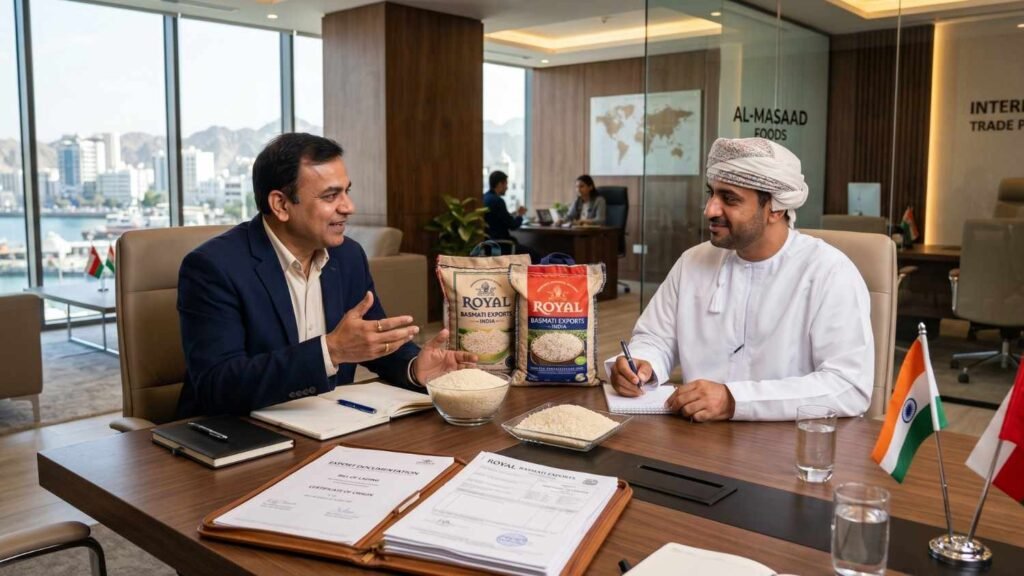
Oman is one of the most discerning rice-importing nations in the Arabian Peninsula, and the country’s preference for Indian grain is not simply a matter of trade convenience. It is rooted in culinary tradition, nutritional values, and a decades-long trust in the consistency that Indian rice exporters have demonstrated shipment after shipment. As a dedicated rice exporter from India to Oman, MAD ERA brings together a heritage of agricultural excellence, end-to-end quality assurance, and full compliance with both Indian export regulations and Oman’s food safety standards. From the celebrated aromatic varieties of 1121 Basmati to pesticide-free long-grain options and cost-effective non-basmati choices, our portfolio is built to serve every segment of the Omani market with the same commitment to quality that has defined our operations since day one.
Why India Leads the World in Rice Exports?
India’s position at the top of the global rice export hierarchy is the result of geography, agricultural investment, and institutional development working together over generations. The Indo-Gangetic Plains, fed by the Ganges, Yamuna, and Beas river systems, provide the precise combination of alluvial soil, groundwater availability, and seasonal temperature variation that produces basmati rice with grain characteristics impossible to replicate in any other part of the world. States like Haryana, Punjab, and western Uttar Pradesh are the heartland of Indian basmati cultivation, and it is from these regions that the finest export-grade rice originates.
India accounts for a commanding share of global rice trade volume, consistently supplying premium grain to over 100 countries. The country’s investment in post-harvest and export infrastructure has kept pace with growing international demand, ensuring that clean, uniform, export-grade rice can be sourced to meet the tightest specifications any global buyer could present.
What makes India uniquely competitive is not just the quality of its raw material, but also its price competitiveness across different quality tiers. Whether an Omani buyer needs ultra-premium aged basmati for a luxury hotel chain or a reliable, affordable non-basmati variety for a large institutional kitchen, Indian exporters can supply both from the same origin with the same logistical efficiency.
Understanding Oman's Rice Import Market
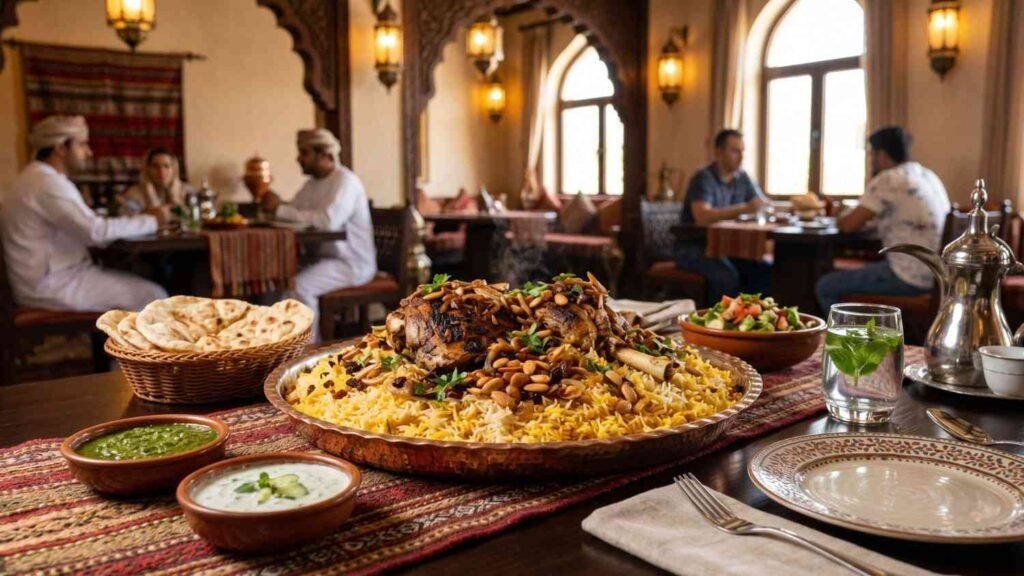
Oman imports a substantial volume of rice annually to meet domestic consumption, and India has been the dominant supplier in this bilateral trade relationship for many years. The Omani diet places rice at the center of daily cooking, with dishes like Majboos, Shuwa-style rice preparations, and aromatic pilaf-style meals forming the backbone of both household and hospitality cuisine. The requirement for a grain that absorbs rich spice infusions, remains fluffy and separate after cooking, and carries its own aromatic identity makes Indian basmati the natural and preferred choice among Omani consumers.
Beyond household kitchens, the hospitality sector in Oman has expanded significantly over the past decade. Hotels, resorts, and institutional caterers across Muscat, Salalah, and Sohar require high-volume, consistent-quality rice to meet the demands of large-scale food service operations. This commercial demand runs parallel to retail market consumption and makes Oman an important destination that rewards exporters who can deliver both quality and volume dependability.
The Rising Demand for Pesticide-Free and Health-Conscious Rice
A growing segment of the Omani consumer market is actively seeking grain that is produced with minimal chemical inputs. Awareness of pesticide residues in food has increased among Omani households and health-focused retailers, driving steady demand for certified pesticide-residue-free rice varieties. Indian exporters who can supply this category with appropriate certification and verified testing documentation have a meaningful competitive advantage in premium retail channels. MAD ERA addresses this demand through a dedicated pesticide-free product line sourced from verified farming communities that follow reduced-input cultivation practices, backed by laboratory testing for residue levels before every export shipment.
MAD ERA: Committed Quality, Every Shipment
MAD ERA has built its reputation as a trusted rice exporter from India to Oman through a combination of rigorous sourcing standards, multi-stage quality control, and reliable logistics execution. Our operations are structured to serve buyers across the full spectrum of Oman’s rice market, from premium retail importers to bulk wholesale distributors and large food service procurement departments.
We source directly from farming communities and work exclusively with FSSAI-certified grading and export units — ensuring complete visibility and control over every stage from farm to port. This direct sourcing model is the foundation of our quality consistency and the reason our buyers in Oman return to us season after season.
Farm-to-Port Sourcing Transparency
Our procurement teams work directly with farming communities in the prime rice-growing zones of Haryana, Punjab, and Uttar Pradesh. At the beginning of each harvest season, we evaluate the crop from our network of partner farms against our internal quality benchmarks for grain length, aroma intensity, moisture content, and export yield before committing to procurement. This direct farm-level engagement eliminates the quality distortions that occur when rice passes through multiple middlemen before reaching the export stage.
For buyers in Oman who value supply chain transparency, our sourcing model provides the traceability that modern food import compliance increasingly demands. We can document the origin of any given consignment from the specific growing region down to the export date, providing the kind of provenance information that builds genuine buyer confidence.
Our Complete Rice Portfolio for Oman
The Omani rice import market is diverse in its requirements. A single exporter capable of covering multiple product categories, quality grades, and processing forms can serve as a one-stop supply partner rather than requiring an importer to manage relationships with multiple vendors. MAD ERA offers precisely this breadth, with a comprehensive range of basmati varieties, non-basmati options, and specialty pesticide-free rice, all sourced and verified to export grade and available in multiple packaging formats.
Premium Basmati Rice Varieties
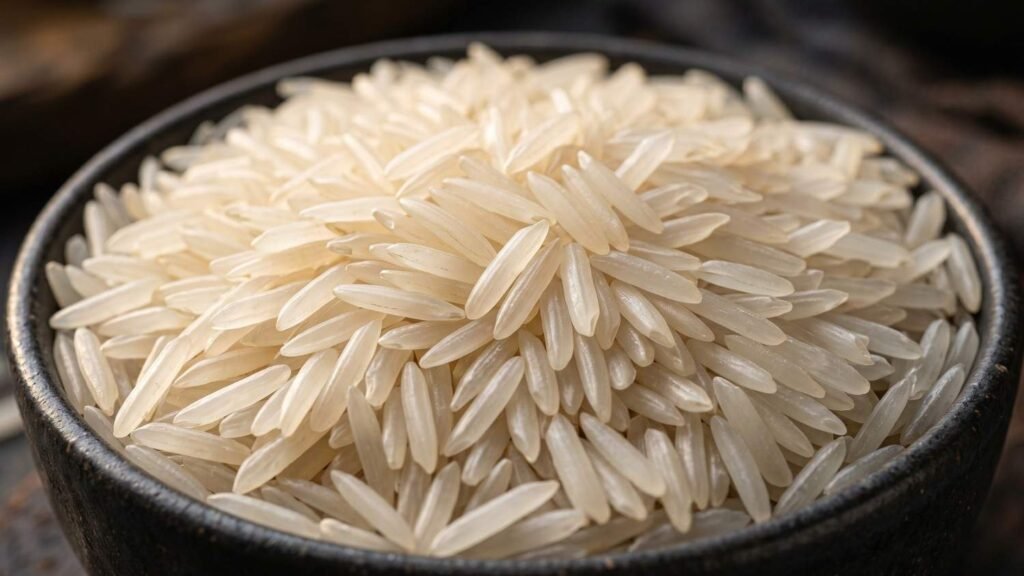
1121 Basmati Rice: Widely regarded as the benchmark variety in the premium basmati segment, 1121 is defined by its extraordinary grain length, which can exceed 8 mm after cooking, and a powerful natural fragrance that sets it apart from all other varieties. It is the preferred choice for Omani hotel kitchens, upscale restaurants, and premium retail buyers. We supply 1121 in four processing forms: raw (white), sella (parboiled), golden sella, and steam.
1718 Basmati Rice: A newer high-yield variety gaining strong traction in Middle Eastern markets, 1718 delivers exceptional grain length comparable to 1121 along with an excellent aromatic profile and cooking performance. Its improved disease resistance in the field translates to better crop consistency, making supply more reliable across seasons. Available in raw, steam, sella, and golden sella forms.
1509 Basmati Rice: Offering a strong balance between quality and accessibility, 1509 is a widely popular variety among mid-tier food service establishments and value-oriented household buyers. Its good elongation ratio, pleasant aroma, and consistent cooking characteristics make it suitable for a broad range of Omani rice preparations. Available in raw, steam, sella, and golden sella forms.
1401 Basmati Rice: Known for its traditional aromatic character and deep compatibility with slow-cooked rice dishes, 1401 is the preferred variety for buyers who prioritize authentic flavor above all else. It performs exceptionally well in Omani Majboos and similar spice-rich rice preparations where the grain needs to absorb complex flavors while retaining its structural integrity.
Pusa Basmati Rice: A well-established variety with a good aromatic profile and reliable cooking performance, Pusa basmati occupies a strong position in the mid-premium segment. Its grain length and elongation ratio make it suitable for a wide range of cooking applications, and its relatively accessible price point makes it popular for regular household consumption.
Traditional Basmati Rice: For buyers seeking the heritage aromatic character of old-generation basmati cultivation, we supply traditionally cultivated aromatic basmati sourced from growing zones where this variety has been cultivated for generations. These command a premium in specialized retail and among discerning households who recognize and seek out the distinct flavor profile of traditional basmati.
Sugandha Basmati Rice: A medium-grain aromatic variety with a distinctive fragrance and pleasing cooking texture, Sugandha is popular in markets that seek an aromatic option at a more economical price point than premium long-grain varieties. Available in raw, steam, sella, and golden sella forms.
Sharbati Basmati Rice: Named for its sweet-like eating quality, Sharbati is a mildly aromatic variety with a soft cooked texture that appeals to consumers who prefer a gentler, less intense fragrance profile. It is widely used in everyday household cooking and institutional meal preparation.
Processing Forms Explained
Each variety we supply is available in multiple processing forms, and understanding the differences helps buyers make the most informed procurement decisions:
Raw (White) Rice: Cleaned and graded from the paddy without any heat treatment. Standard household cooking rice with fresh aroma fully intact.
Sella (Parboiled) Rice: The paddy is soaked and steamed before grading, partially transferring nutrients from the bran layer into the grain. The resulting rice is firmer, non-sticky after cooking, and retains more nutritional content than raw rice. Particularly popular in Oman and across the Gulf.
Golden Sella: A parboiled variant that acquires a characteristic golden coloration during the steaming process. The golden color is associated with premium quality and enhanced cooking performance among buyers in the Middle East.
Steam Rice: Treated with steam in a controlled process that improves grain separation and delivers a cleaner white color profile than traditional sella, with good nutritional retention.
Non-Basmati Rice Varieties
Oman’s rice import requirements extend beyond basmati to include non-basmati varieties used in institutional kitchens, large-scale catering, and economical household consumption. We export a range of non-basmati options that meet Oman’s import requirements for quality and food safety:
PR11 and PR14 Non-Basmati Rice: Long-grain varieties from the Punjab belt, widely used in institutional settings for their reliable cooking performance and economical price point. Available in raw, steam, sella, and golden sella forms.
Parmal Non-Basmati Rice: A medium-long grain variety suitable for everyday cooking and large-scale meal preparation.
Sona Masoori Rice: A lightweight, low-starch variety popular among South Indian communities and in markets that prefer a less aromatic, easy-to-cook everyday rice.
Pesticide-Residue-Free Rice
Our pesticide-residue-free rice line is designed for buyers targeting health-conscious consumers and premium clean-label retail channels. Available across multiple basmati varieties including 1121, 1509, Sugandha, and Sharbati, these products are sourced from partner farms that follow certified reduced-input cultivation programs. Each batch is laboratory-tested for pesticide residue levels before export, with documentation provided as part of the standard shipping package. This category is available in raw, steam, sella, and golden sella forms.
Quality Assurance: Our Multi-Stage Process
Quality management at MAD ERA is a continuous operational discipline, not a single inspection event. Our quality assurance framework is designed to catch and correct any deviation from specification at the earliest possible stage, protecting both our buyers’ interests and the integrity of every consignment we ship to Oman.
Stage One: Sourcing Evaluation
Every lot of rice sourced is evaluated against a strict set of parameters before it is accepted into our export queue. Grain length, moisture content, foreign matter percentage, aroma intensity, and visual clarity are all assessed using calibrated instruments and the trained judgment of our quality team. Rice that does not meet our minimum specifications is rejected at this stage.
Stage Two: Grading and Sorting Verification
At the certified grading units we work with, optical color sorters continuously scan the grain stream and remove any discolored, damaged, or misshapen kernels with precision. Gravity separators eliminate lightweight or hollow grains. Our quality team conducts regular intermediate sampling to verify that the finished product remains consistent with the agreed specification throughout.
Stage Three: Pre-Shipment Laboratory Testing
Before any consignment is cleared for loading, representative samples are tested by accredited laboratories. Parameters tested include average grain length, elongation ratio after cooking, moisture content, broken grain percentage, foreign matter, and where applicable, pesticide residue levels measured against the maximum residue limits (MRLs) recognized by Oman’s food safety authorities. Only consignments that pass all applicable parameters are cleared for export.
Stage Four: Sensory Evaluation
Technical numbers capture what instruments can measure, but the eating experience is ultimately determined by sensory properties that require expert evaluation. Our quality team conducts cooking tests and sensory assessments of aroma, texture, and flavor for each batch before export clearance, ensuring that the product your customer opens and cooks delivers the experience they expect.
Certifications and Regulatory Compliance
Legitimate rice export from India to Oman requires a complete certification framework. MAD ERA holds all the credentials that informed Omani buyers and food safety authorities look for when evaluating an export partner.
APEDA Registration: Our APEDA (Agricultural and Processed Food Products Export Development Authority) registration is the foundational Indian government credential that identifies us as a legitimate, authorized rice exporter. All rice export consignments from India must be backed by APEDA registration.
FSSAI Compliance: We operate in full compliance with the Food Safety and Standards Authority of India, which governs food hygiene, processing standards, and labeling requirements for all food products exported from India.
HACCP Certification: Our HACCP (Hazard Analysis and Critical Control Points) certification confirms that food safety hazards are systematically identified and controlled at every stage of our sourcing, grading, and export operations.
ISO Certification: Our ISO quality management system certification demonstrates our commitment to internationally recognized standards for process consistency, documentation, and continuous improvement.
Halal Certification: Oman is an Islamic nation, and Halal compliance is a non-negotiable baseline for any food product entering the market. Our products and handling operations are Halal certified, ensuring that every consignment we ship meets the religious dietary requirements of Omani consumers without reservation.
GMP Certification: Our Good Manufacturing Practices certification confirms that hygienic conditions, controlled environments, and documented procedures are maintained at every stage of our export operations and at the certified units we partner with.
These certifications are maintained through active compliance programs with regular third-party audits and document reviews, not simply achieved once and forgotten.
Private Label and Custom Packaging Services
MAD ERA supports Omani importers and distributors who want to build their own brand identity in the local market through comprehensive private label and custom packaging services. We can produce rice in your chosen packaging format, print your brand name, logo, and product description in Arabic and English, and ensure that all labeling content meets Oman’s food import labeling standards.
Our packaging options include:
Retail consumer packs: 1 kg, 2 kg, 5 kg, and 10 kg bags in food-grade, moisture-barrier materials.
Mid-range packs: 20 kg and 25 kg bags suitable for larger households and small food service operators.
Commercial bulk packaging: 50 kg woven polypropylene bags and jumbo bags for wholesalers and institutional buyers.
All packaging materials are food-grade and selected for their ability to preserve grain aroma, prevent moisture ingress, and withstand the physical stresses of international container shipping and local warehouse handling. Minimum order quantities for private label programs are discussed directly with buyers based on their specific volume and commercial requirements.
The Export Process: From India to Oman
Exporting rice from India to Oman is a structured, multi-step process that demands precision at every stage. Our experienced export team manages this process from start to finish, ensuring that every consignment arrives at Omani ports document-complete and specification-compliant.
Step 1: Order Confirmation and Planning. Upon receipt of a confirmed purchase order, we schedule sourcing, grading, and packaging according to the agreed specification, quantity, and delivery timeline.
Step 2: Grading and Quality Verification. Sourced rice is processed through certified grading units with continuous quality monitoring at each stage. The finished product is packed according to the agreed packaging format.
Step 3: Pre-Shipment Inspection and Laboratory Testing. Representative samples from the packed consignment are tested by accredited laboratories. Where required by the buyer or by Oman’s import regulations, third-party inspection by an accredited agency is arranged.
Step 4: Export Documentation Preparation. Our documentation team prepares the complete export document package, including the phytosanitary certificate, certificate of origin, APEDA registration copy, commercial invoice, packing list, quality and grade certificate, Halal certificate, health certificate, and bill of lading. Any additional documents required by the Omani importer or their customs broker are prepared on request.
Step 5: Container Loading and Port Dispatch. Rice is loaded into food-grade containers that have been inspected and fumigated per phytosanitary requirements. Containers are sealed and dispatched to the port of loading.
Step 6: Shipment and Tracking. Our logistics team tracks the container from port loading through the voyage to Oman, providing the buyer with real-time updates on vessel position and estimated arrival at the destination port.
Shipping Logistics: India to Oman
Oman is well-served by established shipping lanes from Indian west coast ports. Primary departure ports for India-Oman rice shipments include Kandla, Mundra, and JNPT (Jawaharlal Nehru Port Trust), with transit times to Omani ports such as Mina Sultan Qaboos in Muscat, Salalah, and Sohar typically ranging from 6 to 12 days depending on the specific routing and carrier schedule.
This relatively short transit time compared to routes serving more distant markets is a logistical advantage for both exporters and importers. Shorter ocean transit means lower risk of moisture exposure or quality degradation during the voyage, reduced financing costs for goods in transit, and faster inventory replenishment cycles for Omani distributors.
We work with established freight forwarding partners who maintain dedicated carrier relationships for the India-Gulf corridor, ensuring consistent vessel availability even during peak export seasons when container demand is high. Our logistics coordination ensures that shipping documentation is completed and submitted ahead of vessel cutoff deadlines, preventing the delays that can arise from incomplete paperwork.
Addressing Export Challenges with Experience
The rice export business involves real operational challenges, and transparency about how we manage them is itself an expression of the trustworthiness that buyers need from their supply partners.
Seasonal Crop Variability: Rice quality and availability fluctuate with monsoon patterns and seasonal agricultural conditions. We mitigate this risk by maintaining strategic inventory of key varieties across seasons and by working with a geographically distributed network of farming partners so that a localized crop issue in one area does not disrupt our supply commitments.
Regulatory Updates: Both India and Oman periodically update their food safety regulations, import documentation requirements, and product standards. Our compliance team actively monitors regulatory changes in both countries and updates our export procedures accordingly, so that our buyers are never caught off guard by paperwork or compliance gaps.
Container and Freight Market Volatility: Global shipping has experienced significant disruption in recent years. Our relationships with multiple freight forwarding partners give us routing flexibility to manage around capacity constraints and vessel schedule changes without passing the disruption on to our buyers.
Price Transparency: Commodity rice prices move with crop seasons and global demand patterns. We provide written price quotations valid for defined periods and communicate proactively when market conditions are likely to affect pricing, so that Omani importers can plan their procurement budgets with accurate forward visibility.
Sustainability and Responsible Sourcing
MAD ERA recognizes that the long-term health of the rice export business depends on the sustainability of the agricultural systems that produce the grain. We work progressively toward integrating responsible sourcing practices that protect the farming communities we depend on and the natural resources they rely upon.
We encourage the adoption of water-efficient cultivation methods among our partner farmers, as paddy cultivation is one of the more water-intensive agricultural activities and responsible water stewardship is critical in an era of increasing groundwater pressure across Indian farming regions. We also actively prefer sourcing from farmers who minimize chemical inputs, viewing our pesticide-free product line not just as a commercial segment but as an expression of our broader sustainability commitments.
Packaging materials are selected with environmental impact in mind, and we are actively exploring reduced-plastic alternatives for our retail range. Container loading efficiency is tracked as part of our carbon footprint reduction efforts across the broader logistics chain.
How to Start Working with MAD ERA
For Omani buyers who want to evaluate MAD ERA as a long-term supply partner, we have structured our initial engagement process to make the first steps straightforward and informative.
Contact and Inquiry: Reach out to our export team via our website, email, or phone with details of the variety, processing form, quantity, and packaging requirements you are looking for. Our team will respond within one business day with a preliminary product consultation.
Sample Request: We provide product samples for quality evaluation to all serious prospective buyers. Samples are dispatched to Oman via express courier and typically arrive within 5 to 7 business days. Our samples are drawn from actual export stock so that the quality you evaluate is the quality you will receive in commercial orders.
Commercial Quotation: Once you are satisfied with the sample quality, our team prepares a formal price quotation covering the product specification, quantity, packaging, delivery terms, and pricing valid for a defined period.
Order Placement and Fulfillment: Upon confirmation of the purchase order and agreed payment arrangement, we initiate sourcing, grading, and packaging. We provide complete pre-shipment documentation and shipping details as the cargo is readied for dispatch.
Health and Nutritional Value of Indian Rice
Indian rice, and basmati in particular, is not only culinarily versatile but also nutritionally valuable. This combination of eating quality and health attributes reinforces its status as a preferred staple in Omani homes.
Basmati rice has a lower glycemic index than many other varieties of white rice, making it a more favorable option for consumers managing blood sugar levels. It is naturally gluten-free, making it appropriate for individuals with gluten sensitivity or celiac disease. It provides sustained energy from complex carbohydrates, is low in fat, and contains B-group vitamins and minerals including magnesium and iron.
Pesticide-free rice carries additional health significance by eliminating the risk of chemical residue ingestion, making it the preferred choice for health-conscious families, young children, elderly consumers, and expectant mothers who wish to minimize chemical exposure in their diet. The high dietary fiber content of minimally processed brown rice variants also supports digestive health and helps maintain stable blood sugar levels.
We export a comprehensive range covering premium basmati varieties including 1121, 1718, 1509, 1401, Pusa, Traditional, Sugandha, and Sharbati, as well as non-basmati varieties such as PR11, PR14, Parmal, and Sona Masoori. We also offer a dedicated pesticide-residue-free line across several of these varieties. Each variety is available in multiple processing forms including raw, steam, sella, and golden sella.
Our quality assurance process operates at four stages: sourcing evaluation, grading and sorting verification, pre-shipment laboratory testing for parameters including moisture, grain purity, elongation ratio, and pesticide residues, and final sensory evaluation. Only consignments that pass all quality checkpoints are cleared for export.
Yes, our products and handling operations are fully Halal certified. A Halal certificate is included as a standard component of our export documentation package for all shipments destined for Oman, supporting smooth customs clearance and compliance with Omani import requirements.
Yes, we maintain a dedicated pesticide-residue-free product line sourced from verified reduced-input farming partners. These products are laboratory-tested before each export shipment, and residue test reports are provided as part of the documentation package. The line covers multiple basmati varieties in raw, steam, sella, and golden sella forms.
We supply rice in retail consumer packs from 1 kg to 10 kg, mid-range commercial packs of 20 kg and 25 kg, and bulk trade bags of 50 kg. We also offer private label packaging with custom printing in Arabic and English for Omani distributors who wish to market rice under their own brand name.
We hold APEDA registration, FSSAI compliance certification, HACCP certification, ISO quality management certification, Halal certification, and GMP certification. These collectively cover Indian export regulatory requirements, international food safety management standards, and the specific compliance expectations of Omani import authorities.